Martina Malz (Students United for Future)
PDF-Download deutsch, PDF-Download English
Twenty years ago, the ministers for education of 29 European countries signed the declaration of Bologna, a bold step to harmonise the standards and quality of higher education in the European Higher Education Area (EHEA). Yet today, students still struggle to cash in their ECTS at different institutions. Furthermore, the tangled web of opaque curricula confuses HR-departments all over the economic union.
Introduction
“Higher education, research and innovation play a crucial role in supporting social cohesion, economic growth and global competitiveness. Given the desire for European societies to become increasingly knowledge-based, higher education is an essential component of socio-economic and cultural development. At the same time, an increasing demand for skills and competences requires highe education to respond in new ways.” – excerpt from ESG 2015, p.6, $1.
Progress in automation, largely driven by the innovations made at universities intensify the pressure on the job market. While the use of low qualified human capital is in decline, the markets’ demand in highly qualified resources cannot be met. The Bologna Process set out to mitigate the immanent crisis and, although not having achieved perfection, has made a landmark dent into the staggering training costs. Throughout the last century, the economic stakeholders in industry and service had taken it upon themselves to offer apprenticeships to ready the masses for production. This cost-intensive process has been successfully outsourced to publicly funded institutes like universities, colleges and even schools thanks to the Bologna homogenisation process. Furthermore, industrialists’ associations throughout the union managed to shape and sharpen the profile of education, be it through public-private-partnerships (PPP) or by directly influencing the political decision making process. In return for their invaluable contribution, the stakeholders have been rewarded with tax deductions and promotion opportunities (lecture halls, faculties, institutes and even whole campuses have been named after their Maecenas). On the other side, society pays its tribute in the form of dedicated research, that often result in privately owned patents and pay-to-read publications.
Case study: Physics and Mathematics
Mathematics and physics offer a highly promising field of action to further the technological advances for a competitive economic union, provided that the law making bodies set steps to streamline the cost-benefit equation. The influx of applicants heightens the demand for distinct key performance indicators to assist the decision-making entities’ steering with success in mind. While progress has been made to limit costs and fostering competition by restricting student admission to the fields, there is room for improvement regarding the profile of the student population, student progression and the assessment of the student life cycle (SLC). The current curricula have been adapted gradually towards interoperability and interchangeability, dramatically improved by the common ECTS currency. However, the individuality of lecture content hinders assessment of capabilities by non-academic bodies and throttles employability, stifling economic growth and threatening the competitiveness of the stakeholders on the global market. In the following, the authors identify key issues in the education chain with focus on physics.
Proposal
Identifing the Challenges
Studies and questionnaires have shown that one of the main obstacles for aspiring physicists is the change of mathematical notation between lectures, exemplary shown here on the case of vector notation. While schools tend to omit the introduction the notion of a vector altogether, the introductory courses at the universities tend to agree on the tuple notation  . However, lacking the agreement on the roundness of brackets,
 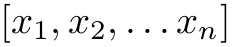 or even
  are commonly found on blackboards throughout the union. This confusion is only furthered by various orientations, e.g.
 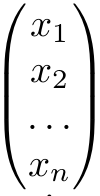 . In order to avoid unnecessary cluttering, following the kaizen doctrine, we propose the development of an unambigous mathematical notation framework, the European Unified Language for Education and Research (EULER) inspired by agile and lean development found in the information technology sector. Analysis of business presentations by top enterpreneurs established the best suited notation for a set of numbers to be a cloud.
Next Steps
Due to the limited scope of the underling evaluation, the authors suggest the constitution of an European task force, supported by renowned consulting entities charged with the prognosis of future demands for every sector and the identification of interdisciplinary clusters. They should further develop the skills needed by applicants to meet those demands. Using blockchain technology, they then should establish a canonical way of identifying the suited candidates from a pool of new-borns, deriving a result-based admission program, loan-based financing scheme and economically viable life long learning approach with efficiency and sustainability in mind. Hereby it is imperative to keep costs at a minimum and avoid to burden private stakeholders.
Expected Return on Investment
Given proper implementation, we expect the average timespan needed to mature a top performing unit from conception to production in less than 15 years, compared to the wasteful 25+ years production cycles that constitute the state of the art. This leads to an expected reduction in costs of 39.1% over the course of the next 35 years. Reducing unnecessary drop-outs by the use of AI-based predictive teaching, another 67.52% in costs currently sunk in unfit material can be avoided. Suitable infrastructure, such as conveyor-belt blackboards and text-block generated presentation slides are expected not only to bring down costs further by 23.583%, but boost the emerging hockey-stick education economy, netting a staggering 10 MEUR by 2025. Provided that the forming student loan bubble is considered too big to fail and securities are saved by the public partner, one has yet to come up with a way to tax ECTS. This is left as an excercise to the reader.
References
Standards and Guidelines for Quality Assurance in the European Higher Education Area (ESG). (2015). Brussels, Belgium. ISBN: 978-9-08-168672-3
by: – European Association for Quality Assurance in Higher Education (ENQA) – European Students’ Union (ESU) – European University Association (EUA) – European Association of Institutions in Higher Education (EURASHE)